Nếu bạn đang kinh doanh piano, guitar hay organ và vẫn loay hoay với việc bán hàng qua fanpage facebook đơn thuần, đã đến lúc nhìn lại chiến lược. Một cửa hàng nhạc cụ muốn phát triển bền vững trong năm 2026 và tương lai gần không thể thiếu một website chuyên nghiệp, nơi khách hàng có thể tìm hiểu, so sánh và đặt mua sản phẩm mọi lúc mọi nơi, ngay cả khi khách hàng đang ở các tỉnh thành khác rất xa bạn.
Thiết kế website bán đàn là quá trình xây dựng một hệ thống thương mại điện tử chuyên biệt cho ngành nhạc cụ, bao gồm trang sản phẩm chi tiết, tính năng nghe thử âm thanh, tích hợp thanh toán và tối ưu chuẩn SEO để tiếp cận đúng khách hàng có nhu cầu mua đàn piano, guitar, organ. Đây không đơn thuần là một trang giới thiệu, mà là công cụ bán hàng và chăm sóc khách hàng hoạt động 24/7, thay thế cho nhân viên tư vấn tại cửa hàng vào những thời điểm bạn không có mặt.
Vì sao chủ cửa hàng phải cần có website bán đàn Piano, Guitar,… Nhạc cụ chuyên nghiệp
Thị trường nhạc cụ Việt Nam đang chứng kiến sự dịch chuyển rõ rệt sang kênh online. Theo Fortune Business Insights Pvt. Ltd (một công ty nghiên cứu thị trường và tư vấn chiến lược toàn cầu): “Thị trường nhạc cụ toàn cầu được định giá 20,94 tỷ USD vào năm 2025 và dự kiến sẽ tăng từ 22,15 tỷ USD vào năm 2026 lên 36,76 tỷ USD vào năm 2034. Khu vực Châu Á Thái Bình Dương chiếm lĩnh thị trường nhạc cụ với thị phần 40,09% vào năm 2025”. Từ con số tăng trưởng mạnh mẽ của khu vực Châu Á Thái Bình Dương (40,09%), có thể thấy nhu cầu học và mua sắm piano tại thị trường Việt Nam cũng đang nằm trong xu hướng bùng nổ này. Người tiêu dùng, đặc biệt là phụ huynh tìm mua đàn piano cho con hoặc người trẻ tìm guitar tập chơi, có xu hướng tra cứu thông tin, xem đánh giá và so sánh giá trước khi đến cửa hàng trực tiếp. Một website bán đàn piano được đầu tư bài bản giúp cửa hàng xuất hiện đúng lúc khách hàng đang tìm kiếm, thay vì chờ đợi khách bước ngang qua cửa.
Chi tiết báo cáo tăng trưởng thị trường tại đây: https://www.fortunebusinessinsights.com/musical-instrument-market-108706
Như vậy, theo khảo sát hành vi mua sắm trực tuyến tại Việt Nam, phần lớn người mua các sản phẩm giá trị cao đều tham khảo tối thiểu ba nguồn thông tin trước khi quyết định, bao gồm website chính thức của người bán, đánh giá từ khách hàng cũ và mạng xã hội. Nếu cửa hàng của bạn không có mặt ở kênh website, bạn đang bỏ lỡ phần lớn nhóm khách hàng có khả năng chi trả cao và đã sẵn sàng mua.
Một cửa hàng nhạc cụ vật lý thông thường chỉ tiếp cận được khách hàng trong bán kính vài km, trong khi một website bán đàn, nhạc cụ chuyên nghiệp được tối ưu SEO có thể tiếp cận khách hàng trên toàn quốc, thậm chí là khách Việt kiều muốn mua đàn tặng người thân trong nước. Đây là lý do các thương hiệu nhạc cụ lớn tại Việt Nam đều đầu tư nghiêm túc vào nền tảng số thay vì chỉ dựa vào cửa hàng offline hay các trang mạng xã hội đơn thuần.
Ngoài ra, việc sở hữu một website bán guitar hay piano chuyên nghiệp còn giúp cửa hàng xây dựng hình ảnh thương hiệu nhất quán, khác biệt với hàng trăm gian hàng nhỏ lẻ trên các sàn thương mại điện tử vốn cạnh tranh chủ yếu bằng giá.
[Sắp ra mắt: Vì sao doanh nghiệp SME cần website riêng thay vì chỉ bán trên sàn TMĐT]
.png "Thiết Kế Website Bán Đàn: 7 Bước Chủ Cửa Hàng Cần Biết 1")
Mời bạn xem thêm: [Sắp ra mắt: Xu hướng thương mại điện tử ngành nhạc cụ tại Việt Nam 2026]
Website bán nhạc cụ có cần mở rộng sang violin, ukulele, trống điện tử, thiết bị âm thanh?
Một câu hỏi thường bị bỏ qua khi lên kế hoạch thiết kế website bán đàn là: website có nên giới hạn ở piano, guitar, organ, hay cần mở rộng danh mục để phủ hết nhu cầu thị trường? Trên thực tế, phần lớn cửa hàng nhạc cụ tại Việt Nam không chỉ kinh doanh một dòng sản phẩm duy nhất. Một cửa hàng piano thường bán kèm ghế đàn, tai nghe, máy đếm nhịp; một cửa hàng guitar thường có thêm dây đàn, capo, pedal effect; và nhiều đơn vị còn mở rộng sang trống điện tử, violin, ukulele hoặc thiết bị âm thanh (micro, mixer, loa di động) để phục vụ cả nhóm khách hàng biểu diễn và phòng thu tại nhà.
Nếu thiết kế website bán đàn chỉ tối ưu quanh 2-3 dòng sản phẩm chính, website sẽ bỏ lỡ một lượng lớn truy vấn tìm kiếm liên quan như “website bán violin”, “thiết kế web bán trống điện tử”, hay “mua ukulele online uy tín”. Đây là các từ khóa có độ cạnh tranh thấp hơn nhưng tỷ lệ chuyển đổi cao, vì người tìm kiếm thường đã xác định rõ sản phẩm muốn mua.
Chiến lược mở rộng danh mục mà không loãng thương hiệu
Để mở rộng phạm vi sản phẩm mà không làm website trở nên rối rắm, cửa hàng nên áp dụng nguyên tắc phân tầng danh mục: nhóm “sản phẩm chủ lực” (piano, guitar, organ) đặt ở vị trí menu chính, trong khi nhóm “sản phẩm mở rộng” (violin, ukulele, trống điện tử, thiết bị âm thanh) được xếp vào một danh mục con riêng biệt như “Nhạc cụ khác” hoặc “Thiết bị âm thanh”. Cách tổ chức này giúp Google hiểu rõ cấu trúc chuyên môn của website mà vẫn giữ được sự tập trung cần thiết cho SEO.
Website bán đàn Piano,.. Nhạc cụ có cần tích hợp nghe thử âm thanh và video demo không?
Đây là một trong những câu hỏi thường gặp nhất mà chủ cửa hàng nhạc cụ đặt ra khi bắt đầu làm website. Câu trả lời là có, và đây gần như là yếu tố bắt buộc đối với các sản phẩm như đàn piano điện, organ hay guitar điện tử. Khách hàng không thể chạm và nghe âm thanh thực tế như khi đến cửa hàng, vì vậy video demo hoặc file âm thanh chất lượng cao chính là công cụ thay thế trải nghiệm trực tiếp. Hmm, bạn phải cần thêm thời gian để thu âm cây đàn của mình và chèn âm thanh vào website để đạt được chất lượng tốt nhất.
Tuy nhiên, vấn đề kỹ thuật quan trọng cần lưu ý là tốc độ tải trang. Nếu nhúng video demo hoặc file âm thanh dung lượng lớn không tối ưu, tốc độ tải trang sản phẩm có thể chậm đi đáng kể, ảnh hưởng trực tiếp đến trải nghiệm người dùng và cả thứ hạng SEO trên Google, vốn đánh giá cao các trang có Core Web Vitals tốt. Giải pháp thường được áp dụng là sử dụng video được lưu trữ trên nền tảng streaming riêng như: Youtube, Cloudflare R2, hoặc các công cụ bạn yêu thích (thay vì tải file gốc lên server), kết hợp lazy-loading để video chỉ tải khi người dùng cuộn đến đúng vị trí.
.png "Thiết Kế Website Bán Đàn: 7 Bước Chủ Cửa Hàng Cần Biết 2")
Mời bạn xem thêm: [Sắp ra mắt: Cách tối ưu hình ảnh và video để website không bị chậm]
So sánh nền tảng phù hợp khi thiết kế website bán đàn dành cho cửa hàng nhạc cụ
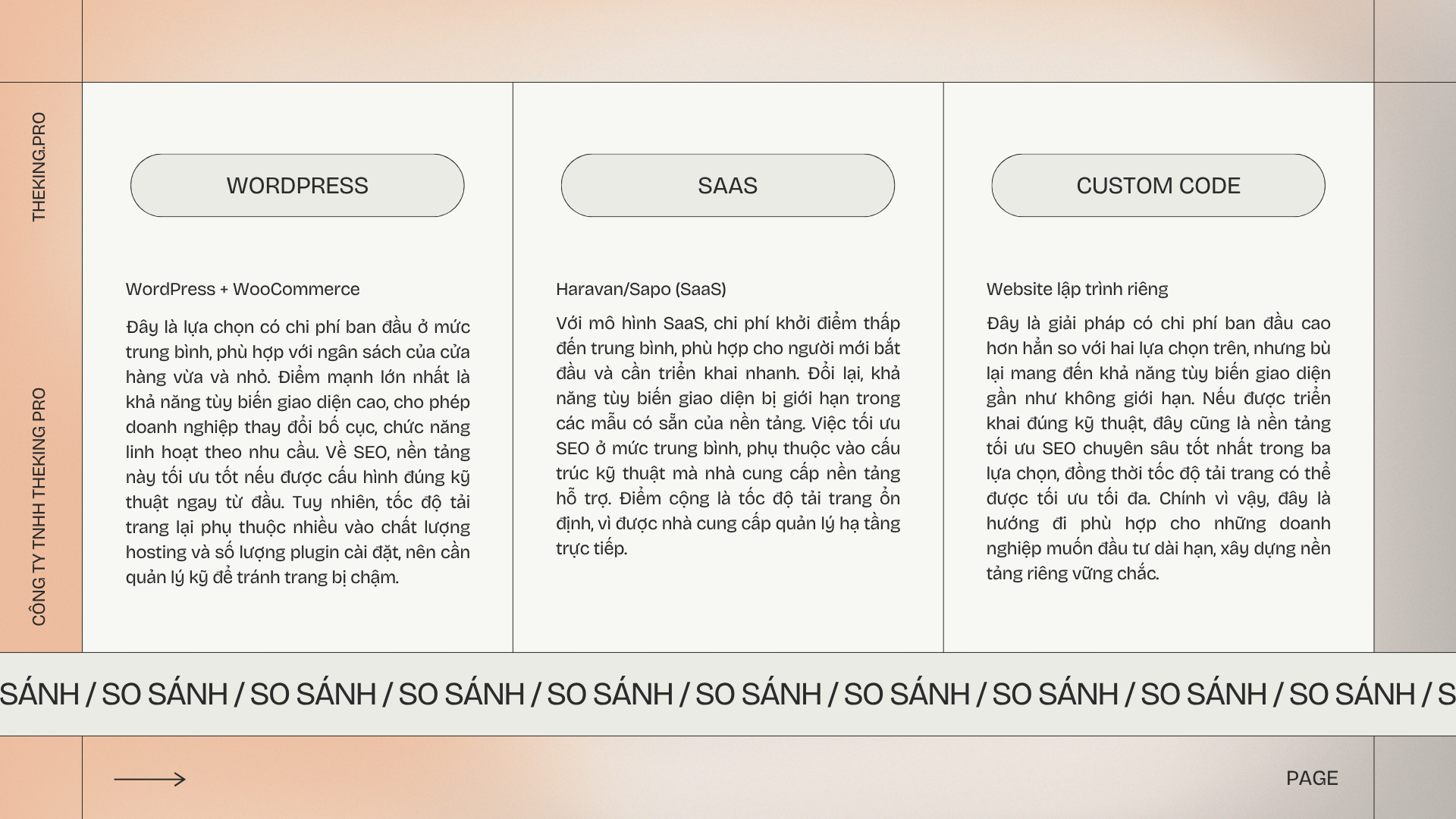
Một trong những quyết định đầu tiên khi bắt tay vào thiết kế website bán nhạc cụ là chọn nền tảng công nghệ nào cho tối ưu. Ba lựa chọn phổ biến nhất hiện nay tại Việt Nam là WordPress kết hợp WooCommerce, các nền tảng SaaS như Haravan, Sapo, và giải pháp website được lập trình riêng (custom code). Mỗi lựa chọn có ưu nhược điểm khác nhau, phù hợp với quy mô và mục tiêu kinh doanh khác nhau.
| Tiêu chí | WordPress/WooCommerce | Haravan/Sapo (SaaS) | Website lập trình riêng |
|---|---|---|---|
| Chi phí ban đầu | Trung bình | Thấp đến trung bình | Cao hơn |
| Khả năng tùy biến giao diện | Cao | Hạn chế theo mẫu có sẵn | Rất cao, không giới hạn |
| Tối ưu SEO chuyên sâu | Tốt, cần cấu hình đúng | Trung bình, phụ thuộc nền tảng | Tốt nhất nếu làm đúng kỹ thuật |
| Tốc độ tải trang | Phụ thuộc hosting và plugin | Ổn định, do nhà cung cấp quản lý | Có thể tối ưu tối đa |
| Phù hợp cho | Cửa hàng vừa và nhỏ | Người mới bắt đầu, cần nhanh | Doanh nghiệp muốn đầu tư dài hạn |
Với đặc thù ngành nhạc cụ, nơi sản phẩm có giá trị cao và cần truyền tải được cảm xúc, chất lượng âm thanh, chất liệu gỗ, độ tinh xảo trong thiết kế, một website bán đàn guitar tích hợp thanh toán online cần giao diện đủ linh hoạt để thể hiện được những chi tiết này một cách trực quan, thay vì bị bó buộc trong khuôn mẫu chung của nền tảng SaaS.
[Sắp ra mắt: Nên chọn WordPress hay nền tảng SaaS khi mở shop online]
Mời bạn xem thêm: [Sắp ra mắt: Chi phí thực tế khi vận hành website bán hàng theo từng nền tảng]
Cấu trúc danh mục sản phẩm chuẩn khi thiết kế website bán đàn
Cấu trúc danh mục (category structure) là yếu tố quyết định cả trải nghiệm người dùng lẫn khả năng SEO của một website bán nhạc cụ. Rất nhiều chủ cửa hàng khi triển khai thiết kế website bán đàn chỉ tập trung vào giao diện đẹp mà bỏ qua việc quy hoạch danh mục ngay từ đầu, dẫn đến tình trạng phải sửa lại toàn bộ cấu trúc URL sau vài tháng, điều này gây thiệt hại nghiêm trọng cho SEO vì mất đi lịch sử index của Google.
Mô hình menu 3 tầng cho website nhạc cụ
Một cấu trúc menu chuẩn nên được tổ chức theo 3 tầng:
- Tầng 1 — Danh mục lớn theo loại nhạc cụ: Đàn Piano, Đàn Guitar, Đàn Organ, Trống Điện Tử, Thiết Bị Âm Thanh, Phụ Kiện Nhạc Cụ, Giáo Trình Âm Nhạc.
- Tầng 2 — Phân nhóm theo tính chất sản phẩm: Ví dụ trong danh mục Piano có thể chia thành Piano Cơ, Piano Điện, Piano Cũ, Piano Mới 100%.
- Tầng 3 — Phân nhóm theo thương hiệu hoặc phân khúc giá: Yamaha, Kawai, Roland; hoặc theo mức giá dưới 20 triệu, 20-50 triệu, trên 50 triệu.
Cách phân tầng này không chỉ giúp khách hàng tìm sản phẩm nhanh hơn mà còn tạo ra hàng loạt trang danh mục (category page) có thể tối ưu SEO độc lập, mỗi trang nhắm vào một cụm từ khóa riêng biệt như “đàn piano Yamaha cũ giá rẻ” hay “piano điện dưới 20 triệu”.
Thanh tìm kiếm và bộ lọc thông minh
Bên cạnh menu, một website bán đàn hiện đại cần thanh tìm kiếm hỗ trợ gợi ý tự động (autosuggest) và bộ lọc theo giá, thương hiệu, tình trạng còn hàng, kích thước. Với sản phẩm có giá trị cao như piano, bộ lọc theo khoảng giá gần như là tính năng bắt buộc, vì phần lớn khách hàng có ngân sách xác định trước khi bắt đầu tìm kiếm.
Chi phí thiết kế website bán đàn piano, guitar, organ,… nhạc cụ là bao nhiêu?
Một trong những câu hỏi được khách hàng của THEKING PRO đặt ra nhiều nhất là: chi phí thiết kế một website bán nhạc cụ như: piano, guitar, organ,… chuyên nghiệp là bao nhiêu, và liệu có phát sinh chi phí ẩn trong quá trình sử dụng hay không?
Trên thực tế, chi phí thiết kế website bán đàn piano trọn gói tại Việt Nam dao động khá rộng tùy theo quy mô và tính năng, thường chia thành ba phân khúc:
- Gói cơ bản (dùng giao diện dựng sẵn, tùy biến giới hạn) từ 7-10 triệu đồng (500 USD);
- Gói tiêu chuẩn (thiết kế theo yêu cầu, tích hợp thanh toán, quản lý kho) từ 12-25 triệu đồng (1000 USD);
- Và gói cao cấp (thiết kế riêng biệt theo local brand, tối ưu SEO chuyên sâu, tích hợp CRM, chatbot) từ 30 triệu đồng trở lên (>2000 USD).
Chi phí ẩn thường phát sinh từ các khoản: gia hạn hosting/domain hàng năm, phí duy trì SSL, phí plugin/ứng dụng bên thứ ba (như cổng thanh toán, phần mềm quản lý tồn kho), và chi phí bảo trì kỹ thuật sau bàn giao. Một đơn vị uy tín sẽ minh bạch toàn bộ các khoản này ngay từ đầu trong bản báo giá thiết kế web bán nhạc cụ trọn gói, tránh tình trạng khách hàng bị “đội giá” giữa chừng.
THEKING PRO Đồng Hành Cùng Bạn Trong Mọi Dự Án Thiết Kế Website
Hiểu được những đặc thù và thách thức riêng của ngành bán lẻ nhạc cụ, CÔNG TY TNHH THEKING PRO (Mã số thuế/GCNĐKDN: 0402345815) cung cấp dịch vụ thiết kế website trọn gói, chuẩn SEO, dành riêng cho các cửa hàng piano, guitar, organ tại Việt Nam. Không chỉ dừng lại ở việc xây dựng giao diện đẹp mắt, THEKING PRO tập trung vào việc xây dựng một hệ thống có khả năng bán hàng thực sự: từ trang sản phẩm tối ưu chuyển đổi, tích hợp tính năng đặt lịch thử đàn, đến chiến lược nội dung SEO giúp website lên top Google với các từ khóa mà khách hàng tiềm năng đang tìm kiếm.
Với hợp đồng minh bạch, xuất hóa đơn điện tử đầy đủ theo quy định pháp luật, THEKING PRO cam kết đồng hành cùng khách hàng không chỉ ở giai đoạn thiết kế mà cả quá trình vận hành và tối ưu lâu dài sau đó. Nếu bạn đang tìm kiếm dịch vụ thiết kế website bán đàn piano uy tín, một đối tác thiết kế website cửa hàng nhạc cụ tại Đà Nẵng hoặc bất kỳ tỉnh thành nào trên cả nước, đây là thời điểm phù hợp để trao đổi trực tiếp.
Cam kết dịch vụ cụ thể khi thiết kế website bán đàn tại THEKING PRO
Để khách hàng có cơ sở đánh giá rõ ràng khi lựa chọn đơn vị thiết kế website bán đàn, THEKING PRO cam kết các điều khoản dịch vụ cụ thể sau, được quy định rõ trong hợp đồng:
- Thời gian bàn giao: Tùy theo gói dịch vụ (cơ bản, tiêu chuẩn, cao cấp), thời gian hoàn thành được cam kết cụ thể ngay trong hợp đồng, không phát sinh trì hoãn ngoài dự kiến trừ trường hợp khách hàng thay đổi yêu cầu giữa chừng.
- Chính sách bảo hành kỹ thuật: Hỗ trợ sửa lỗi kỹ thuật phát sinh sau bàn giao trong thời gian bảo hành quy định, không tính phí phát sinh cho các lỗi thuộc trách nhiệm của đơn vị thiết kế.
- Chính sách backup định kỳ: Dữ liệu website được sao lưu định kỳ để giảm thiểu rủi ro mất dữ liệu do sự cố kỹ thuật hoặc tấn công mạng.
- Hỗ trợ chỉnh sửa sau bàn giao: Có chính sách hỗ trợ điều chỉnh nội dung, hình ảnh trong phạm vi thỏa thuận sau khi website đi vào vận hành.
- Minh bạch chi phí: Toàn bộ chi phí duy trì hàng năm (hosting, domain, SSL) được liệt kê rõ ràng ngay từ báo giá ban đầu, không phát sinh khoản phí ẩn.
Việc công khai các cam kết này ngay từ đầu giúp khách hàng an tâm hơn khi quyết định đầu tư vào một dự án website dài hạn, đồng thời tạo ra tiêu chuẩn minh bạch mà THEKING PRO hướng tới trong toàn bộ ngành dịch vụ thiết kế website tại Việt Nam.
Liên hệ với CÔNG TY THEKING PRO qua các kênh sau để được tư vấn miễn phí:
- Website: https://theking.pro/
- Email: [email protected]
- Facebook: https://www.facebook.com/thekingpro9999
- Zalo OA: https://zalo.me/4526743441632006244
- Instagram: https://www.instagram.com/thekingpro9999/
- PayPal (thanh toán quốc tế): https://paypal.me/thekingpro9999
Xây dựng lòng tin với sản phẩm giá trị cao qua kênh online
Một thách thức lớn với các sản phẩm như piano, vốn có giá trị từ vài chục đến vài trăm triệu đồng, là làm sao để khách hàng đủ tin tưởng đặt mua mà không cần đến tận nơi kiểm tra. Đây cũng là câu hỏi thường gặp thứ hai mà nhiều chủ cửa hàng băn khoăn.
Phân biệt hành vi mua hàng: khách mua nhanh và khách cân nhắc kỹ
Một yếu tố thường bị bỏ qua khi thiết kế website bán đàn là việc phân biệt rõ hai nhóm hành vi mua hàng hoàn toàn khác nhau, từ đó thiết kế trải nghiệm người dùng (UX) phù hợp cho từng nhóm.
Nhóm 1 — Khách hàng quyết định nhanh
Đây thường là nhóm mua phụ kiện, đàn phổ thông giá thấp (ukulele, guitar tập chơi cơ bản) hoặc người mới bắt đầu học nhạc. Nhóm này ra quyết định chủ yếu dựa trên giá cả, mẫu mã và đánh giá thực tế từ người mua trước. Với nhóm này, trang sản phẩm cần hiển thị rõ ràng giá, thông số kỹ thuật cơ bản, nút “Thêm vào giỏ hàng” nổi bật, và quy trình thanh toán tối giản số bước nhất có thể.
Nhóm 2 — Khách hàng cân nhắc kỹ
Đây là nhóm mua sản phẩm giá trị cao (piano, guitar cao cấp, thiết bị âm thanh chuyên nghiệp), thường cân nhắc kỹ về âm sắc, chất liệu, thương hiệu và chính sách hậu mãi. Nhóm này cần được cung cấp video demo âm thanh chi tiết, bài so sánh giữa các dòng sản phẩm, blog kiến thức chuyên sâu, và kênh tư vấn trực tiếp (Zalo, hotline) để giải đáp thắc mắc trước khi quyết định.
Việc thiết kế hai luồng trải nghiệm riêng biệt — một luồng tối giản cho quyết định nhanh, một luồng giàu thông tin cho quyết định cân nhắc — giúp website phục vụ tốt cả hai nhóm khách hàng mà không làm loãng trải nghiệm của bên còn lại.
Niềm tin trong thương mại điện tử ngành nhạc cụ được xây dựng qua nhiều lớp yếu tố cộng hưởng.
- Trước tiên là tính minh bạch thông tin: hiển thị đầy đủ giấy tờ pháp lý của doanh nghiệp, chính sách bảo hành – đổi trả rõ ràng, và địa chỉ cửa hàng vật lý cụ thể (nếu có) để khách hàng có thể xác minh.
- Thứ hai là bằng chứng xã hội (social proof) như đánh giá của khách hàng cũ (ví dụ: đánh giá thật từ Google Map kèm hình ảnh, đánh giá thật trên trang webiste bán đàn của chủ cửa hàng), hình ảnh/video thực tế quá trình đóng gói và giao hàng, giúp giảm cảm giác rủi ro khi mua hàng online.
- Thứ ba là chính sách bảo vệ người mua như cho phép đổi trả trong thời gian nhất định nếu đàn không đúng như mô tả, hoặc hỗ trợ kiểm tra hàng trước khi thanh toán toàn bộ (COD một phần).
- Cuối cùng, hiển thị các chứng nhận đại lý chính hãng (nếu có) với các thương hiệu như Yamaha, Kawai cũng là yếu tố then chốt giúp tăng độ tin cậy, bởi đây là hai thương hiệu piano được tìm kiếm nhiều nhất tại thị trường Việt Nam.
Ngoài ra, việc cung cấp tư vấn chuyên sâu qua các kênh như Zalo OA hoặc Facebook Messenger giúp khách hàng có thể trao đổi trực tiếp với nhân viên tư vấn có chuyên môn, mô phỏng lại trải nghiệm được tư vấn tại cửa hàng vật lý ngay trên nền tảng số.
.png "Thiết Kế Website Bán Đàn: 7 Bước Chủ Cửa Hàng Cần Biết 4")
Mời bạn xem thêm: [Sắp ra mắt: 5 yếu tố tín hiệu uy tín mọi website bán hàng cần có]
Giải pháp vận chuyển và thanh toán phù hợp hàng cồng kềnh
Website bán nhạc cụ nên tích hợp những phương thức thanh toán và vận chuyển nào để phù hợp với đặc thù hàng cồng kềnh như đàn piano, organ?
Khác với các mặt hàng nhỏ gọn, đàn piano và một số loại organ là sản phẩm cồng kềnh, dễ hư hỏng nếu vận chuyển không đúng cách.
Đây là bài toán vận hành đặc thù mà ít ngành hàng thương mại điện tử nào gặp phải ở mức độ tương tự. Đàn piano cơ hoặc piano điện cỡ lớn có trọng lượng từ vài chục đến hơn trăm kg, đòi hỏi đơn vị vận chuyển chuyên biệt có xe tải, nhân lực bốc xếp và kinh nghiệm đóng gói chống sốc, khác hẳn với dịch vụ giao hàng nhanh thông thường (shipper xe máy). Giải pháp vận chuyển đàn piano khi bán hàng online hiệu quả thường kết hợp giữa đối tác vận tải chuyên chở nội thất/thiết bị cồng kềnh cho các đơn hàng liên tỉnh, và đội ngũ giao hàng nội bộ của cửa hàng cho khu vực gần để đảm bảo kiểm soát chất lượng lắp đặt tại nhà khách hàng. Vì vậy, khi triển khai website bán đàn piano chuẩn SEO 2026, phần tích hợp vận chuyển và thanh toán cần được thiết kế riêng biệt, không thể áp dụng nguyên mẫu chung của các website bán hàng tiêu dùng thông thường.
Về thanh toán, với sản phẩm giá trị lớn, website cần hỗ trợ đa dạng lựa chọn: chuyển khoản ngân hàng (phổ biến nhất do độ tin cậy cao), thanh toán qua cổng trung gian (VNPay, MoMo, ZaloPay) cho giao dịch nhanh, và đặc biệt là chính sách trả góp qua thẻ tín dụng hoặc công ty tài chính hợp tác – yếu tố then chốt giúp giỏ hàng và thanh toán online cho shop nhạc cụ không bị bỏ dở giữa chừng vì rào cản tài chính.
Ngoại lệ, nhiều cửa hàng còn áp dụng hình thức đặt cọc online kết hợp thanh toán phần còn lại khi giao hàng để giảm rủi ro cho cả hai bên.
.png "Thiết Kế Website Bán Đàn: 7 Bước Chủ Cửa Hàng Cần Biết 5")
Website bán đàn giúp tối ưu quản lý kho và vận hành nội bộ
Bên cạnh vai trò là kênh bán hàng hướng tới khách hàng (frontend), một lợi ích quan trọng nhưng thường bị bỏ qua khi đầu tư thiết kế website bán đàn là khả năng tối ưu vận hành nội bộ (backend) cho chính cửa hàng.
Đồng bộ dữ liệu tồn kho theo thời gian thực
Với các cửa hàng có cả kênh bán offline và online, việc đồng bộ dữ liệu tồn kho theo thời gian thực giúp tránh tình trạng nhận đơn hàng cho sản phẩm đã hết hàng tại cửa hàng vật lý — một lỗi vận hành phổ biến gây mất uy tín với khách hàng. Hệ thống quản lý kho tích hợp trên website cho phép nhân viên cập nhật số lượng tồn ngay khi có giao dịch, dù bán tại showroom hay qua website.
Giảm chi phí quản lý thủ công
Trước khi có website, nhiều cửa hàng nhạc cụ quản lý thông tin sản phẩm, giá cả, đơn nhập-xuất bằng sổ sách hoặc file Excel rời rạc, dễ xảy ra sai sót và tốn nhiều thời gian đối chiếu. Một hệ thống quản lý tích hợp ngay trên nền tảng website giúp doanh nghiệp tiết kiệm đáng kể thời gian vận hành, đồng thời cung cấp dữ liệu chính xác hơn để ra quyết định nhập hàng, định giá và lên kế hoạch kinh doanh theo mùa vụ.
Kết nối dữ liệu bán hàng với công cụ phân tích
Việc kết nối website với Google Analytics và các công cụ theo dõi hành vi người dùng không chỉ phục vụ mục đích marketing, mà còn giúp chủ cửa hàng nắm được sản phẩm nào đang được quan tâm nhiều nhất, từ đó điều chỉnh chiến lược nhập hàng và trưng bày sản phẩm sát với nhu cầu thị trường thực tế hơn.
Chiến lược SEO giúp website bán đàn piano,.. nhạc cụ lên top Google 2026
Sau khi có website, làm sao để lên được top Google khi cạnh tranh trong ngành nhạc cụ tại Việt Nam ngày càng gay gắt? Đây là câu hỏi mà mọi chủ cửa hàng đều quan tâm sau giai đoạn thiết kế ban đầu.
Chiến lược tối ưu SEO website bán đàn piano Yamaha Kawai hiệu quả cần triển khai đồng bộ trên ba trụ cột: SEO kỹ thuật (technical SEO), SEO nội dung (content SEO) và SEO off-page. Về mặt kỹ thuật, website cần đảm bảo tốc độ tải trang nhanh, chuẩn dữ liệu có cấu trúc (schema markup) cho sản phẩm và FAQ để tăng khả năng xuất hiện ở các đoạn trích nổi bật (Featured Snippet), cùng với thiết kế website bán hàng chuẩn mobile vì phần lớn lưu lượng tìm kiếm hiện nay đến từ thiết bị di động.
Về nội dung, cửa hàng cần xây dựng hệ thống bài viết blog xoay quanh các chủ đề người dùng thực sự tìm kiếm như cách chọn đàn piano cho người mới học, so sánh các dòng đàn Yamaha – Kawai, hay cách viết mô tả sản phẩm đàn piano thu hút khách để tối ưu cho cả trang danh mục lẫn trang sản phẩm. Về off-page, việc xây dựng backlink chất lượng từ các trang uy tín trong lĩnh vực âm nhạc, giáo dục, cùng với việc duy trì hoạt động tích cực trên mạng xã hội sẽ củng cố độ tin cậy tổng thể của website trong mắt Google.
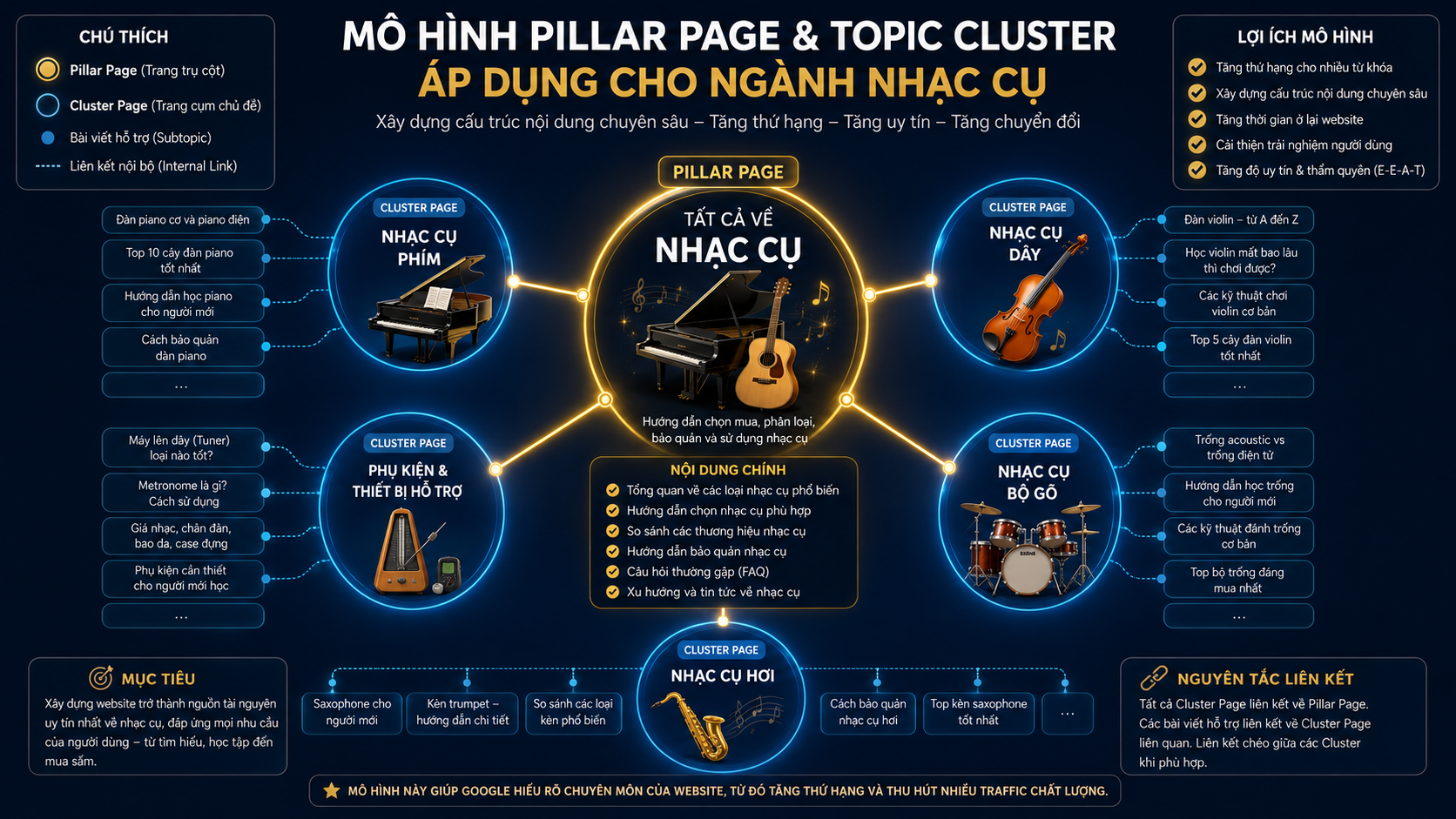
Chiến lược hiệu quả nhất hiện nay là xây dựng mô hình Pillar Page kết hợp Topic Cluster: một trang trụ cột tổng quan về chủ đề lớn (ví dụ: cách chọn mua đàn piano cho người mới học), liên kết đến các bài viết vệ tinh đi sâu vào từng khía cạnh nhỏ hơn (cách bảo quản piano, phân biệt piano cơ và piano điện, giá đàn piano theo từng phân khúc). Mô hình này giúp Google hiểu website của bạn có chuyên môn sâu và toàn diện về ngành nhạc cụ, từ đó đánh giá cao độ uy tín theo tiêu chí E-E-A-T (Kinh nghiệm, Chuyên môn, Uy tín, Đáng tin cậy).
Bên cạnh đó, việc tối ưu giao diện website bán nhạc cụ Yamaha, Kawai với schema markup cho sản phẩm (giá, đánh giá, tình trạng còn hàng) giúp Google hiển thị thông tin phong phú ngay trên trang kết quả tìm kiếm, tăng tỷ lệ click từ người dùng.
.png "Thiết Kế Website Bán Đàn: 7 Bước Chủ Cửa Hàng Cần Biết 6")
.png "Thiết Kế Website Bán Đàn: 7 Bước Chủ Cửa Hàng Cần Biết 7")
Lộ trình SEO 0–90 ngày cho website bán đàn piano, guitar, organ
Để chiến lược SEO không bị dàn trải và thiếu định hướng, THEKING PRO áp dụng lộ trình triển khai theo từng giai đoạn 30 ngày, giúp chủ cửa hàng dễ dàng theo dõi tiến độ và đo lường kết quả khi đầu tư thiết kế website bán đàn chuẩn SEO.
Giai đoạn 1 (Ngày 0–30): Nền tảng kỹ thuật
Tập trung hoàn thiện cấu trúc website, tối ưu tốc độ tải trang, cấu hình schema markup cho sản phẩm và FAQ, thiết lập cấu trúc URL chuẩn SEO ngay từ đầu để tránh phải thay đổi về sau — vốn gây ảnh hưởng tiêu cực đến thứ hạng đã có.
Giai đoạn 2 (Ngày 30–60): Nội dung và chuyển đổi
Triển khai hệ thống bài viết theo mô hình Pillar Page và Topic Cluster xoay quanh các chủ đề người dùng thực sự tìm kiếm: cách chọn đàn piano cho người mới học, so sánh các dòng đàn Yamaha–Kawai, hướng dẫn bảo quản nhạc cụ. Đồng thời tối ưu trang sản phẩm và trang combo để tăng tỷ lệ chuyển đổi.
Giai đoạn 3 (Ngày 60–90): Mở rộng hệ sinh thái
Triển khai backlink chất lượng từ các trang uy tín trong lĩnh vực âm nhạc, kết hợp chạy quảng cáo Google Ads/Facebook Ads song song để tăng tốc độ tiếp cận trong giai đoạn website còn đang tích lũy thứ hạng tự nhiên. Đây cũng là giai đoạn website chuyển từ vai trò “kênh bán hàng” sang vai trò “nền tảng quản trị kinh doanh” khi đã có đủ dữ liệu khách hàng và hành vi mua sắm để tối ưu liên tục.
Tính năng bắt buộc trên website bán đàn piano hiện đại năm 2026
Để một website bán đàn piano thực sự vận hành hiệu quả và tối ưu chuyển đổi (CRO – Conversion Rate Optimization), có một số nhóm tính năng cốt lõi không thể thiếu:
- Trang sản phẩm chi tiết: Bao gồm thông số kỹ thuật đầy đủ (kích thước, số phím, chất liệu, xuất xứ), hình ảnh đa góc độ, và mô tả sản phẩm được viết theo hướng giải quyết nhu cầu thực tế của người mua (ví dụ: phân biệt rõ dòng đàn cho người mới học và người chơi chuyên nghiệp).
- Chức năng đặt lịch thử đàn: Với sản phẩm giá trị cao, nhiều khách hàng vẫn muốn trải nghiệm trực tiếp trước khi mua. Tính năng xây dựng website bán đàn piano có tính năng đặt lịch thử đàn giúp cửa hàng chủ động sắp xếp nhân sự tư vấn, tăng tỷ lệ chốt đơn.
Tích hợp đặt lịch học thử nhạc cho cửa hàng có trung tâm dạy nhạc
Nhiều cửa hàng nhạc cụ tại Việt Nam không chỉ đơn thuần bán đàn mà còn vận hành song song một trung tâm dạy nhạc — đây là mô hình kinh doanh hybrid giúp tăng đáng kể vòng đời giá trị khách hàng (customer lifetime value). Khi triển khai thiết kế website bán đàn cho nhóm khách hàng này, tính năng đặt lịch học thử cần được phân biệt rõ với tính năng đặt lịch thử đàn thông thường.
Sự khác biệt giữa “đặt lịch thử đàn” và “đặt lịch học thử”
Đặt lịch thử đàn phục vụ mục đích trải nghiệm sản phẩm trước khi mua, thường chỉ diễn ra một lần. Trong khi đó, đặt lịch học thử là bước đầu trong phễu chuyển đổi dài hạn — từ học thử miễn phí, đến đăng ký khóa học, và cuối cùng có thể quay lại mua đàn tại chính cửa hàng đó. Vì vậy, form đặt lịch học thử cần thu thập thêm thông tin như độ tuổi học viên, loại nhạc cụ muốn học, khung giờ rảnh trong tuần, và mục tiêu học (giải trí hay thi chứng chỉ).
Lợi ích kinh doanh của mô hình tích hợp
Việc tích hợp module đặt lịch học thử ngay trên website bán đàn tạo ra một vòng tuần hoàn khép kín: học viên học thử → đăng ký khóa học → được tư vấn mua đàn phù hợp với trình độ → tiếp tục mua phụ kiện, nâng cấp đàn theo thời gian. Đây là lý do các trung tâm nhạc cụ kết hợp dạy học thường có tỷ lệ khách hàng quay lại cao hơn đáng kể so với cửa hàng chỉ bán lẻ đơn thuần.
- Chatbot tư vấn tự động: Tích hợp chatbot tư vấn mua đàn online 24/7 giúp giải đáp nhanh các câu hỏi cơ bản về giá, bảo hành, vận chuyển ngay cả ngoài giờ hành chính.
- Giỏ hàng và thanh toán online đa dạng: Hỗ trợ nhiều phương thức từ chuyển khoản, ví điện tử, đến trả góp qua thẻ tín dụng cho các sản phẩm giá trị lớn.
- Blog/tin tức chuyên ngành: Nội dung hướng dẫn chọn đàn, bảo quản nhạc cụ giúp tăng độ tin cậy thương hiệu và hỗ trợ chiến lược SEO dài hạn.
Đặc biệt: tính năng đang dần trở thành tiêu chuẩn trên các mẫu website bán nhạc cụ đẹp chuẩn thương mại điện tử là hệ thống đặt lịch thử đàn trực tuyến. Với sản phẩm như piano hay guitar cao cấp, nhiều khách hàng vẫn muốn đến trực tiếp cửa hàng để trải nghiệm trước khi quyết định, đặc biệt với các dòng đàn có giá trị lớn.
Việc tích hợp form đặt lịch ngay trên trang sản phẩm, đồng bộ với lịch làm việc của nhân viên tư vấn, giúp cửa hàng chủ động sắp xếp thời gian đón tiếp, tránh tình trạng khách đến vào lúc cửa hàng đông hoặc không có nhân viên chuyên môn phù hợp để tư vấn. Tính năng này đặc biệt hiệu quả khi kết hợp với việc gửi tin nhắn nhắc lịch tự động qua Zalo hoặc SMS, giảm tỷ lệ khách quên lịch hẹn.
Combo sản phẩm & phụ kiện đi kèm — chiến lược tăng giá trị đơn hàng
Một trong những sai lầm phổ biến khi thiết kế website bán đàn là chỉ tập trung bán từng sản phẩm đơn lẻ mà bỏ qua cơ hội tăng giá trị đơn hàng trung bình (AOV — Average Order Value) thông qua các gói combo. Trên thực tế, khách hàng mua piano hoặc guitar gần như luôn có nhu cầu phát sinh: ghế ngồi, tai nghe, bao đựng đàn, máy lên dây, hoặc phụ kiện bảo quản.
Cách xây dựng trang combo hiệu quả
Thay vì để khách hàng tự tìm mua phụ kiện riêng lẻ ở nơi khác, website nên chủ động thiết kế các gói combo có landing page riêng, ví dụ:
- Combo “Piano cho người mới học”: đàn piano điện + ghế ngồi + tai nghe + sách giáo trình cơ bản.
- Combo “Guitar acoustic trọn bộ”: guitar + bao đựng + capo + bộ dây dự phòng + máy lên dây.
- Combo “Thiết bị thu âm tại nhà”: micro thu âm + mixer mini + tai nghe kiểm âm.
Mỗi trang combo nên được tối ưu SEO riêng biệt với tiêu đề và mô tả rõ ràng, vì đây là nhóm từ khóa có ý định mua hàng (buyer intent) rất cao — người tìm kiếm “combo guitar cho người mới tập” gần như đã sẵn sàng chốt đơn, không còn ở giai đoạn tham khảo.
Về mặt vận hành, hình thức combo còn giúp cửa hàng giải quyết được bài toán tồn kho phụ kiện — vốn thường bị mua lẻ tẻ, khó dự báo nhu cầu — bằng cách gắn liền với doanh số bán đàn chính, vốn dễ dự đoán hơn.
[Sắp ra mắt: Tích hợp chatbot tư vấn mua hàng tự động cho website bán lẻ]
Mời bạn xem thêm: [Sắp ra mắt: Cách tích hợp Zalo OA và Messenger vào website bán hàng]
Cách viết mô tả sản phẩm đàn piano thu hút
Nội dung mô tả sản phẩm thường bị xem nhẹ, nhưng lại là yếu tố quyết định trực tiếp đến tỷ lệ chuyển đổi. Một mô tả sản phẩm tốt cho website bán đàn piano cần vượt qua việc chỉ liệt kê thông số kỹ thuật khô khan như kích thước, số phím, chất liệu.
Thay vào đó, mô tả nên kể được câu chuyện trải nghiệm: cảm giác khi chạm phím, chất lượng âm thanh trong không gian phòng khách gia đình, sự phù hợp với người mới học hay người chơi chuyên nghiệp. Kết hợp thông số kỹ thuật đầy đủ (phục vụ người mua có kiến thức) với ngôn ngữ cảm xúc (phục vụ người mua theo trải nghiệm) là công thức giúp trang sản phẩm vừa thân thiện với công cụ tìm kiếm, vừa thuyết phục được cả hai nhóm khách hàng.
5 sai lầm khiến website bán nhạc cụ không hiệu quả
Không phải cửa hàng nào đầu tư thiết kế website bán đàn cũng đạt được hiệu quả như mong đợi. Dưới đây là 5 sai lầm phổ biến nhất mà THEKING PRO ghi nhận được qua quá trình tư vấn cho nhiều chủ cửa hàng nhạc cụ tại Việt Nam.
5.1. Quá chú trọng thẩm mỹ mà bỏ qua chuẩn SEO Onpage
Nhiều chủ cửa hàng ưu tiên giao diện bắt mắt nhưng quên mất rằng một website đẹp mà không được tối ưu SEO onpage (tiêu đề, thẻ mô tả, cấu trúc heading, tốc độ tải trang) sẽ gần như “vô hình” trên Google. Kết quả là website tồn tại nhưng không mang lại khách hàng mới.
5.2. Chọn nền tảng không phù hợp với quy mô phát triển dài hạn
Việc chọn một nền tảng SaaS giá rẻ ban đầu có thể tiết kiệm chi phí, nhưng khi cửa hàng phát triển và cần tùy biến sâu (tích hợp CRM, chatbot, hệ thống combo phức tạp), việc chuyển đổi nền tảng sẽ tốn kém hơn nhiều so với đầu tư đúng ngay từ đầu.
5.3. Không có landing page riêng cho từng dòng đàn chuyên biệt
Khi tất cả sản phẩm piano đều dồn chung vào một trang danh mục duy nhất, website sẽ khó cạnh tranh với các đối thủ có landing page chuyên biệt cho từng dòng đàn (ví dụ: landing page riêng cho “piano Yamaha U1” thay vì gộp chung trang “tất cả piano”).
5.4. Hệ thống giỏ hàng và thanh toán phức tạp, thiếu chuyên nghiệp
Với sản phẩm giá trị cao như piano, quy trình thanh toán rườm rà hoặc thiếu tùy chọn trả góp sẽ khiến khách hàng bỏ dở giỏ hàng ngay ở bước cuối cùng — nơi họ đã gần như quyết định mua.
5.5. Nội dung rời rạc, không đồng bộ với chiến lược tiếp thị tổng thể
Blog viết ngẫu hứng, không theo mô hình Pillar Page/Topic Cluster, khiến website khó xây dựng được độ uy tín chuyên môn (E-E-A-T) trong mắt Google, dẫn đến thứ hạng tìm kiếm không ổn định theo thời gian.
Kết luận nhanh: 7 bước thiết kế website bán đàn piano từ A-Z
Tổng hợp lại toàn bộ quy trình, dưới đây là 7 bước thiết kế website bán đàn piano mà bất kỳ chủ cửa hàng nào cũng cần nắm rõ trước khi triển khai:
- Xác định mô hình kinh doanh và đối tượng khách hàng mục tiêu – phân khúc giá, dòng sản phẩm chủ lực (piano, guitar, organ).
- Lựa chọn nền tảng công nghệ phù hợp – cân nhắc giữa WordPress, Haravan hoặc nền tảng tùy chỉnh riêng theo quy mô.
- Thiết kế giao diện (UI/UX) chuẩn thẩm mỹ và tối ưu chuyển đổi – ưu tiên trải nghiệm mobile-first.
- Xây dựng nội dung sản phẩm chuyên sâu – hình ảnh, video demo, thông số kỹ thuật đầy đủ, minh bạch.
- Tích hợp tính năng thanh toán, vận chuyển và chăm sóc khách hàng – Zalo OA, Messenger, chatbot tư vấn.
- Tối ưu SEO kỹ thuật và nội dung ngay từ giai đoạn phát triển – schema, tốc độ tải trang, cấu trúc URL.
- Kiểm thử, vận hành thử nghiệm và tối ưu liên tục sau khi ra mắt – theo dõi hành vi người dùng để cải thiện tỷ lệ chuyển đổi.
Quy trình xây dựng website bán nhạc cụ từ A-Z này, nếu được thực hiện bài bản ngay từ đầu, sẽ giúp cửa hàng tránh được tình trạng phải làm lại website sau vài tháng do thiếu định hướng chiến lược rõ ràng.
Câu Hỏi Thường Gặp
1. Chi phí thiết kế website bán đàn piano,… nhạc cụ chuyên nghiệp là bao nhiêu, và có phát sinh chi phí ẩn không?
Chi phí phụ thuộc vào tính năng và mức độ tùy biến, dao động theo từng gói dịch vụ. Để tránh phát sinh chi phí ẩn, doanh nghiệp nên chọn đơn vị có hợp đồng minh bạch, liệt kê rõ từng hạng mục và có xuất hóa đơn điện tử đầy đủ.
2. Website bán đàn piano,… nhạc cụ có cần tích hợp tính năng nghe thử âm thanh hay video demo không?
Có, đây gần như là yếu tố bắt buộc với các sản phẩm như piano điện, organ. Cần sử dụng giải pháp streaming và lazy-loading để không làm chậm tốc độ tải trang.
3. Làm sao để khách hàng tin tưởng mua sản phẩm giá trị cao như piano mà không cần đến trực tiếp?
Cần hiển thị rõ chính sách bảo hành, đổi trả, đánh giá thật từ khách hàng cũ, và các chứng nhận đại lý chính hãng nếu có.
4. Website bán đàn piano,… nhạc cụ nên tích hợp phương thức thanh toán và vận chuyển nào?
Nên đa dạng phương thức thanh toán bao gồm chuyển khoản, cổng thanh toán online, đặt cọc trước với sản phẩm giá trị cao, kết hợp đơn vị vận chuyển chuyên biệt có bảo hiểm cho hàng cồng kềnh.
5. Sau khi có website, làm sao để lên top Google trong ngành nhạc cụ đang cạnh tranh gay gắt?
Cần chiến lược nội dung dài hạn theo mô hình Pillar Page và Topic Cluster, kết hợp tối ưu schema markup sản phẩm để tăng độ uy tín và khả năng hiển thị trên kết quả tìm kiếm.
Bài viết được thực hiện bởi đội ngũ nội dung THEKING PRO. Nếu cửa hàng của bạn đang cần tư vấn thiết kế website bán đàn, nhạc cụ chuyên nghiệp, liên hệ ngay qua theking.pro hoặc Zalo OA để được hỗ trợ trực tiếp.